
Schema Markup on Every Page
We add structured data (FAQ, Article, HowTo, and Organization schema) so AI engines and search crawlers understand exactly what your page is about and can surface it with confidence.
Get discovered wherever people search with AI. We create authoritative content built to surface in ChatGPT, Perplexity, Claude, AI Overviews, Gemini, Grok, and more.
Get My Free Content Quote
 Strategy delivered in 14 days
No long-term contract required
Built around your keywords, not a template
Strategy delivered in 14 days
No long-term contract required
Built around your keywords, not a template













Results from Kapissh Curtains, a UniBright content client, over an 18-month program
Organic Traffic Growth
Keywords Ranking Page 1
More Blog-Sourced Leads
Avg. Time to First Rankings
Search has changed. People no longer just type keywords into Google — they ask ChatGPT, Gemini, Perplexity, and Google's AI Overviews full questions and expect a direct answer. If your content isn't structured for these AI engines, it stays invisible no matter how good the writing is. AI SEO content writing fixes that by shaping every page so AI models can read it, trust it, and cite it as the source.
Ranking in AI search isn't luck — it's structure. Here's how we build each page so it becomes the answer AI pulls from:
We add structured data (FAQ, Article, HowTo, and Organization schema) so AI engines and search crawlers understand exactly what your page is about and can surface it with confidence.

Clear, scannable lists give AI models clean, extractable points to quote. Listicle formatting is one of the formats AI Overviews and ChatGPT pull from most often.

We write the way people actually ask questions, pairing each real query with a direct, self-contained answer — the exact structure AI engines look for when choosing what to cite.

The key answer comes first, then the supporting detail. This lets AI extract a clean response without digging, making your page the go-to source.
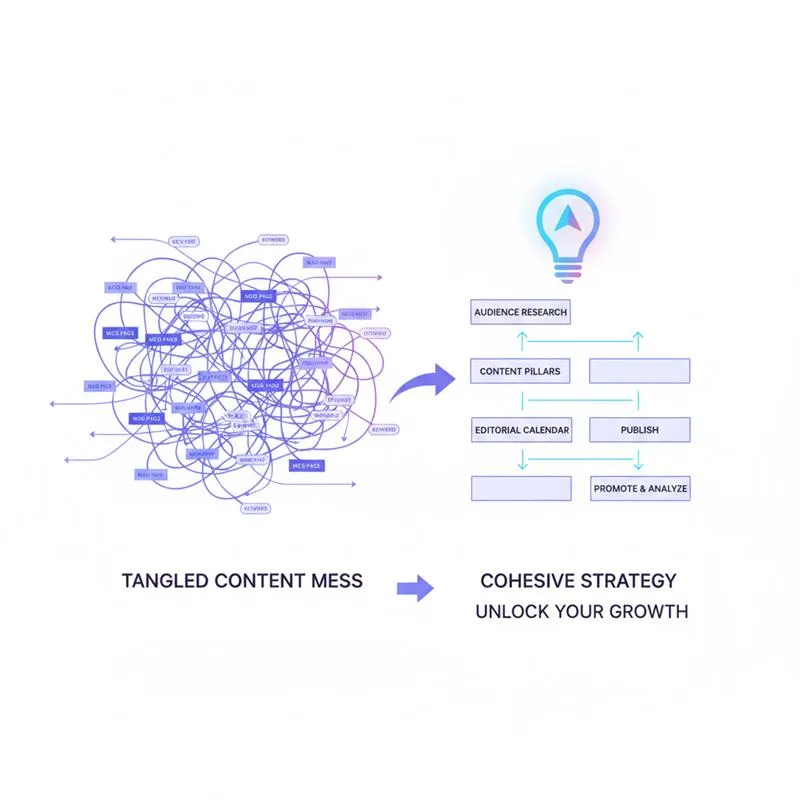

We connect related pages into clusters so AI sees your site as a genuine authority on the topic, not a one-off post.
UniBright is a full-service SEO content writing agency in the USA — strategy, research, writing, and optimization - run by one team instead of four freelancers you have to manage yourself. Think of us as your content marketing services partner: we're measured on rankings and conversions, not how many words we turned in.

We use AI to speed up research and first drafts. A human writer edits and fact-checks every piece before it ships.

A topic plan and content brief for every piece, based on a content audit and a look at what's already winning.

Researched, structured posts that go after real keywords and support the pages you actually make money from.

Product descriptions, category pages, and buying guides that pull in search traffic and push it toward checkout.

Rework existing pages — tighter structure, better internal linking — to recover rankings that slipped.

Answer-first formatting and schema so a page can surface in AI Overviews and get cited by ChatGPT or Gemini.

A monthly look at rankings, traffic, and conversions, plus what we're doing next because of it.


Homepage and service page copy written to rank for commercial terms, not just to read well.
SEO content writing is content that's researched, written, and structured to rank in search engines while still being genuinely useful to the person reading it. It's not just dropping a keyword into a blog post — it means understanding what someone is actually trying to find out, answering that fully, and organizing the page so search engines can tell what it's about. A page built this way earns clicks from Google, keeps people reading once they land, and supports the other pages on your site through internal linking. Do it consistently and it becomes one of the few marketing assets that keeps paying off months after you stop actively promoting it.
Expect the first real movement in a few months, with competitive keywords often taking four to six months to show meaningful gains — sometimes faster for easier, long-tail terms, sometimes slower in crowded industries. A newer site with little existing authority will generally take longer than one that's already established. That's the honest range; anyone promising rankings in two weeks isn't being straight with you. It's also why tracking doesn't stop at publish — we watch what's happening after a piece goes live and refresh it if it stalls, because ranking well is closer to a habit than a single event.
Usually it's one of a few things: wrong keyword, misread search intent, too thin to compete with what's already ranking, or nothing on the site links to it so it never builds authority. Sometimes the writing itself is fine and the real problem is structural — no internal links, no schema, nothing signaling to Google what the page is about. We start any audit with a gap analysis against whoever's currently outranking you, because guessing at fixes without that comparison usually wastes a few more months.
SEO copywriting is short and persuasive — product pages, ads, landing pages — written to get someone to act right now. SEO content writing plays the long game: blog posts and guides that build trust and answer questions before someone's ready to buy. One brings people in through search, the other convinces them once they've landed on a page built to sell. Most sites need both, and honestly, treating them as interchangeable is one of the more common mistakes we see when we audit a new client's site.
Depends what's missing. If you just need a strong writer and already have strategy and SEO covered in-house, a freelancer can genuinely be the right call. Most businesses don't have that — they need strategy, writing, and optimization all working together, which is where an agency earns its cost. You also get coverage: no single point of failure if one person is out sick or moves on. As a rough rule, agency work tends to cost less than a full-time hire once you account for benefits and management time, and it ships more reliably — inconsistent publishing is the more common problem than bad writing.
Structure your content so tools like ChatGPT, Perplexity, Claude, Gemini, Grok, and Google's AI Overviews can quote it directly. Place the main answer at the top of each section instead of hiding it, use specific names instead of vague terms, and back up claims with real numbers or examples. Add schema for machine-readability, and write in a clear question-and-answer format — it mirrors how people prompt AI. If a piece can grab a featured snippet, it's well on its way to being ready for AI search.
Strategy, writing, and optimization, usually bundled as one service rather than three separate hires. That means keyword research and a content brief before anyone starts writing, the actual writing — blog posts, website copy, product pages — and then on-page SEO, internal linking, and schema after the draft is done. Most agencies, UniBright included, also report on rankings and traffic monthly so you're not left guessing whether it's working. What varies is scope: some businesses just need consistent blog writing services, others want the whole thing — website copy, clusters, a dedicated strategist — running at once.
It can be, but only if a person is genuinely involved. Google has said plainly that it doesn't penalize content for being AI-assisted — it penalizes thin, low-effort content, and AI makes it very easy to produce a lot of that very fast. The safe version looks like this: AI speeds up research or a first draft, and then a writer with real subject knowledge rewrites, fact-checks, and edits before anything published. What gets sites in trouble is skipping that last step and publishing raw output at volume. That's the line we don't cross.
Put the direct answer near the top of the section instead of burying it in the fourth paragraph. Use specific, named entities instead of vague language, back claims up with real numbers or examples, and add schema so the structure is machine-readable. Writing sections in a clear question-and-answer format helps too — it's exactly what lets a tool like ChatGPT pull a clean quote instead of skipping your page. If a piece is already well-organized enough to win a featured snippet, it's most of the way to being AI-search-ready as well.
AEO, or Answer Engine Optimization, means structuring a page so Google (or a voice assistant) can lift a clean, direct answer straight out of it — that's the same skill that earns featured snippets. GEO, Generative Engine Optimization, is the newer cousin: writing so tools like ChatGPT, Gemini, and Perplexity can understand your page well enough to cite it when someone asks a related question. Neither replaces traditional SEO — they layer on top of it, using clear definitions, answer-first sections, and schema markup. If you're not thinking about both by now, you're optimizing for half the ways people actually search.
Four to eight solid, well-researched posts a month is a reasonable range for most small and mid-sized businesses. Competitive industries or large ecommerce catalogs sometimes need more to build real topical authority, but more low-quality posts is almost never the answer — a tight cluster of genuinely useful, connected pieces beats a pile of thin ones every time. The right number really comes down to what the data says once you're a few months in, which is why we treat it as something to adjust, not a number we lock in on day one.